
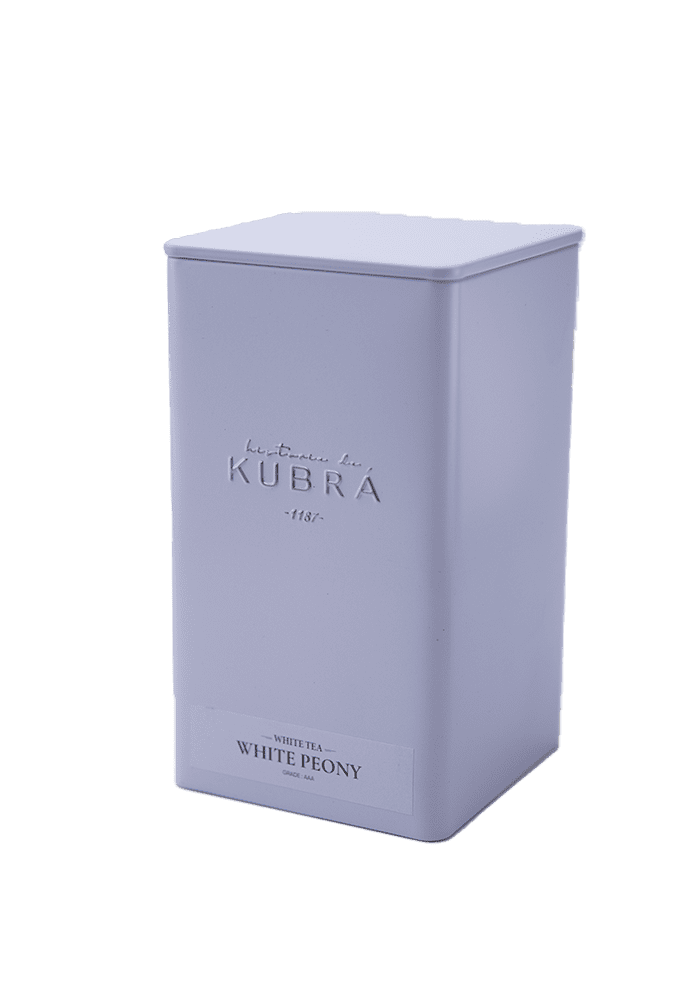
White Peony
White tea (Bai Cha) is a variety of traditional Chinese tea that undergoes minimal processing during preparation. Its fermentation level does not exceed 5-7%. In some ways, it can even be called a “tea herbarium” because it is not rolled during preparation. The preparation process, similar to green tea, does not exceed one day, and the technological chain is even shorter. However, despite this, many nuances must be considered to produce high-quality and flavorful white tea. The beginning of white tea dates back to the Tang Dynasty, approximately 618-907 AD. It gained high appreciation among the nobility during 960-1279 AD, in the time of the Song emperors. At that time, only aristocratic society could afford it due to its high cost. According to legend, the first bush that later became the source of white tea leaves was discovered in the Taishu Mountains by a woman named Taimu. She used a decoction from its buds to treat measles in children. Later, she started cultivating the bushes in her garden and taught her neighbors how to care for the plants. The modern technique of working with white tea was first applied by the Xiao family of tea masters in the 18th century in northern Fujian. They excluded rolling and roasting to create a more economical production. Today, the main production area for Bai Cha is Fujian, specifically in the counties of Fuding, Jianyang, Sunsi, Zhenghe, and also in Guangxi.